ByJohn A
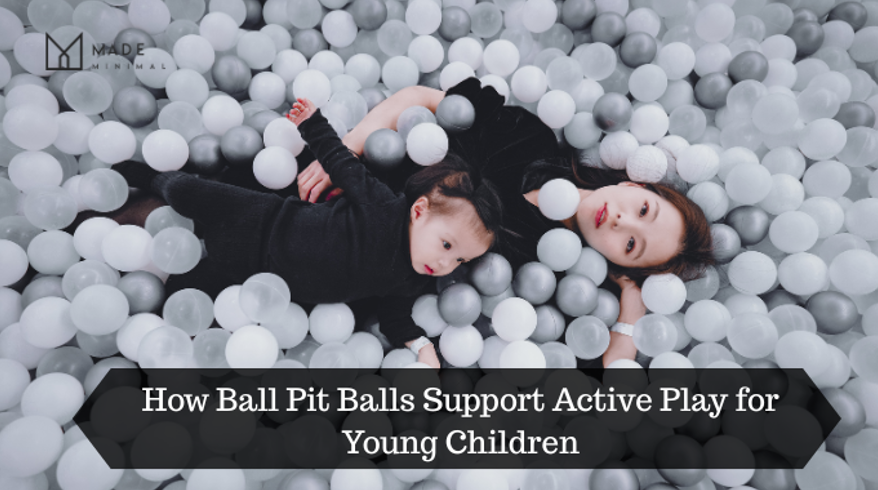
How Ball Pit Balls Support Active Play for Young Children
Ball pit play supports children’s development by encouraging whole-body movement, sensory exploration, and early social interaction all at once. It’s one of those activities that looks like simple fun from the outside but is doing a lot more underneath.
The reason most parents don’t realise this is because the developmental side isn’t obvious when you’re watching a child happily toss balls around. But that enjoyment is exactly what makes it work.
At Made Minimal, we’ve helped many families create play spaces at home and seen firsthand what a difference getting it right makes. That’s why we put together this guide. We’ll explain the developmental benefits, the right age to get started, and what to look for when choosing ball pit balls.
Let’s get started.
The Developmental Benefits of Ball Pit Play
The main developmental benefits fall into three areas: gross motor skills, sensory development, and social skills. Each one develops differently, so it’s worth exploring them individually.

Building Gross Motor Skills
Gross motor skills cover big movements like walking, climbing, throwing, and balancing. A ball pit challenges all of them at once.
The loose, shifting balls force a child’s legs and core to work harder just to stay upright. As children move through the pit, climbing in and out builds leg strength. Meanwhile, scooping, tossing, and catching balls help improve hand-eye coordination.
From what we’ve seen, kids who spend regular time in a ball pit often move with more confidence on uneven surfaces, like sand or grass. Their bodies have simply had more practice adjusting to ground that shifts under them (bonus points if they get better at not falling over during backyard cricket).
Sensory Development Through Touch and Colour
Young children learn a great deal through touch, and ball pits give them plenty to work with. The texture of the plastic, the way they shift and roll, and the sound they make when dropped all feed into a child’s sense of touch and sound.
Colour adds another layer to this. Bright, varied colours help children begin identifying and naming shades, which supports early visual development. Every handful of balls is a small sensory lesson, even though it looks like nothing more than play.
Social Skills From Shared Play
A ball pit changes character when more than one child is in it. Suddenly there’s a shared space to manage, balls to negotiate over, and another person to respond to. It’s these everyday interactions that help build social skills. You can see it in the small things.
Children use words to direct each other, call out colours, and set their own informal rules. Along the way, they learn to read another child’s reactions and adjust how they play. Those early interactions help build communication, cooperation, and emotional awareness that carry over into childcare rooms and school playgrounds.
Creativity tends to follow close behind. Kids often invent their own games and mini stories around the pit, layering imaginative play on top of what’s already a physical and social workout.
What Age Is Right for Ball Pit Play?
Ball pit play generally suits children from around 6 months, once they can sit up on their own, through to the early primary years. What changes is how they play and how much supervision they need.
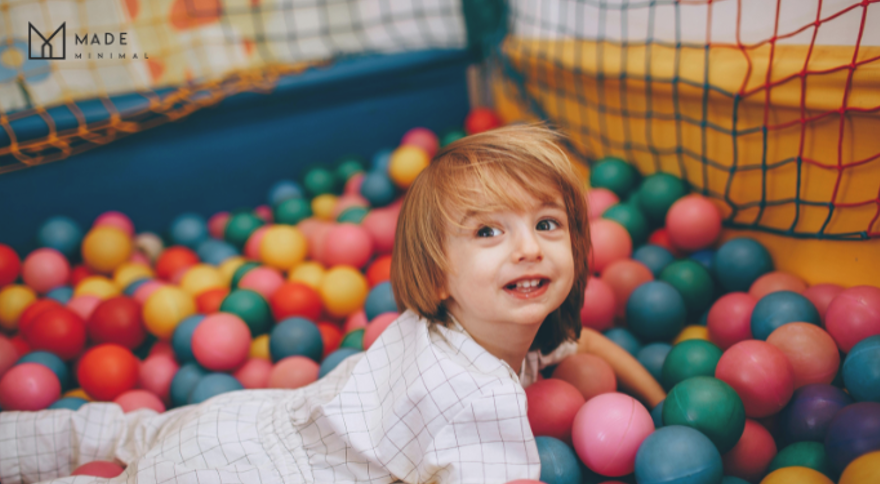
Babies and younger toddlers tend to explore balls with their mouths as much as their hands, so supervision needs to be close and constant at this stage. As children move past two years old, play becomes more physical, with more crawling, climbing and throwing, and less mouthing.
By the time children reach 3 or 4, they’re usually playing more independently and starting to invent their own games within the pit. Even then, it’s worth keeping an eye on things, particularly once several children are playing together and the energy in the room picks up.
Choosing the Right Ball Pit Balls
Not every ball pit ball is built the same way, and those differences affect both safety and how much kids get out of play. The good news is that once you know what to look for, choosing the right ones is fairly simple. Start with these five factors:
- Size: A good safety rule is to pick balls too large to pass the small parts test. In Australia, anything that fits into a 31mm cylinder is considered a choking hazard for children under three. Most standard options sit well above this threshold, though you should still check the size before you buy.
- Material: Look for high-quality materials that are BPA-free and free from strong chemical smells, since children handle these toys directly with their hands and mouths.
- Weight: Lightweight balls are easier and safer for small hands to grip, throw, and carry.
- Colour: A wide range of colours supports the sensory and visual benefits covered earlier, so choose sets with a variety of shades.
- Durability: Balls that resist cracking hold up better under repeated throwing and stepping, and active play puts more force on them than it looks.
Quick Tip: Steer away from bulk bags that don’t clearly list their materials or safety certifications. They’re often cheaper for a reason, and lower-quality plastic can crack more easily and have a stronger chemical smell.
Keeping Ball Pit Play Safe and Hygienic
Ball pits have a reputation for being hard to keep clean, but a simple routine is all it takes to stay on top of it. Most of the actual work comes down to two things: washing the balls and checking them for damage.
Wipe the balls down regularly with a mild soap solution, then let them dry fully before putting them back. Any that stay damp can develop mould, especially if they’re stored somewhere enclosed and away from sunlight.
While you’re at it, look for any that have started to crack, stick together, or drop pieces when handled. It’s just a safety check, but damaged plastic can leave sharp edges that aren’t always obvious until a small hand finds them.
The pit itself needs the same attention. Check the walls and floor surface every so often for wear, particularly if it sits near a window. More sun exposure means some plastics degrade faster over time.
Easy Ball Pit Games for Active Play
A ball pit keeps most kids entertained on its own, but adding a game now and then gives them a reason to come back to it again and again. It also adds a layer of skill-building on top of the free play already happening.
Here are four easy ones to start with:
- Colour Sort: Call out a colour and challenge your child to find and collect as many matching balls as they can. It’s an excellent way to build colour recognition without it ever feeling like a lesson.
- Count and Collect: A bucket and a number are all you need for this one. Just ask your child to find that many balls and drop them in. Toddlers just starting to grasp numbers often take to it quickly.
- Target Toss: A cardboard box or a hoop placed a short distance away makes a good target. Once the first few rounds are done, most kids start inventing their own rules and raising the difficulty themselves.
- Sensory Dig: Hide a few small objects beneath the balls and let your child dig them out by feel rather than sight. You don’t need any extra equipment, and it’s one of those children’s play activities that most kids find genuinely hard to walk away from.
Remember to try one game at a time rather than all four in a single sitting. Kids tend to stick with whatever holds their attention that day, and rotating through the list keeps the pit feeling fresh week to week.
See also: Applications of Cognitive Computing in Business
Ready to Set Up a Play Space They’ll Actually Use?
A ball pit earns its place in a child’s routine because each play session builds stronger muscles, sharper senses, and the early groundwork for getting along with others.
And none of that takes anything complicated. It just needs the right balls, a bit of supervision, and a willingness to let your child get a little messy.
If you’re looking for balls that will hold up to daily play, our Eco-Friendly Soft Plastic Balls for Kids are a solid place to start. They’re BPA-free, child-friendly, and built with younger children in mind.
You can check the full range over on the Made Minimal website, along with the rest of their child-safe play furniture.