ByJohn A
You’re Overpaying for Business Class by $2,400 a Ticket. Here’s Why — and How to Stop
Marcus Chen is a management consultant based in Chicago. He flies internationally about 14 times a year. In 2023, he booked a business class round trip from O’Hare to Frankfurt through a major online travel agency and paid $5,400. A colleague sitting two rows ahead of him on the same flight paid $3,200 for an identical seat. Same airline. Same route. Same day. The difference? His colleague used a consolidator-certified agency. Marcus found this out over dinner in Frankfurt and spent the rest of the trip quietly furious. His story isn’t rare. It’s the rule. Travelers who book premium cabin tickets through standard retail channels — airline websites, big-box OTAs — routinely overpay by thousands of dollars per ticket because those platforms only show you what airlines want you to see. Discounted business class tickets are available via consolidator-certified platforms like travelbusinessclass.com, but the industry has almost no incentive to tell you that.
The average overpayment isn’t trivial. It clocks in at around $2,400 per ticket compared to what consolidator-level pricing actually delivers. Multiply that across four or five international trips a year and you’re looking at a $10,000 gap — money that vanishes silently into airline revenue management systems while you assume you got a fair price because you checked three websites before booking.
Why Airlines Price Business Class the Way They Do
Airlines don’t price business class seats based on what they cost to provide. They price them based on what the most desperate, least informed buyer will pay at any given moment. That’s not cynicism. That’s yield management — a science airlines have refined for decades using algorithms that adjust fares dynamically based on booking pace, route demand, corporate travel cycles, and competitive pressure.
The published fare you see on an airline’s website or a major booking engine reflects the maximum retail price the carrier believes the market will absorb. It is not a reflection of the seat’s actual cost to the airline. According to research from MIT’s Airline Data Project, airlines routinely operate premium cabins at load factors well below economy — meaning those seats fly partially empty rather than sell at rates that would fill them. The solution airlines found wasn’t to lower retail prices. It was to create a parallel wholesale channel.
That channel is the consolidator market. Airlines pre-sell unsold premium inventory at negotiated bulk rates to certified agency partners. These agencies — accredited through the Airlines Reporting Corporation (ARC), the same regulatory body that oversees airline ticket settlement in the United States — then resell those tickets to travelers at prices well below the published retail fare. The savings range from 15% on shorter premium routes to 60% on long-haul business and first class itineraries.
Here’s the part nobody explains clearly: this market is entirely legitimate. It’s not gray-market reselling. It’s not auction-style bidding on distressed inventory. It’s a structured, regulated pricing tier that has existed for decades — one that most travelers never access because it’s not visible on Google Flights, Expedia, or any standard booking engine. You have to go through an ARC-certified consolidator agency to reach it. And almost no one tells casual travelers that this option exists.
What a Human Advisor Does That No Algorithm Can
The travel technology industry spent 20 years convincing you that booking engines are better than travel agents. For $300 economy flights between domestic cities, that argument holds up reasonably well. For a $6,000 business class round trip to Singapore with a three-night stopover in Tokyo and a return from a different city, it falls apart completely.
Automated platforms are built to find the cheapest available published fare matching your exact search parameters. They are not built to combine fares across carriers to reduce the total cost of a complex itinerary. They cannot hold inventory while you confirm your travel dates with a client. They don’t know that the business class product on Lufthansa’s Frankfurt hub has a significantly different seat configuration than the same airline’s Munich departure. And when your first leg cancels at 11pm in Dubai and you need a same-day reroute to make a morning meeting in London, no chatbot is going to solve that problem with the urgency it requires.
A dedicated travel advisor does all of this. Not because it’s convenient — because the financial and logistical stakes of premium international travel demand it. Services like TravelBusinessClass.com operate with a team of 130-plus advisors, each carrying more than a decade of specialized experience in premium cabin booking. That depth of knowledge matters in ways that are hard to quantify until you’re standing at a gate counter at midnight with a missed connection and a $7,000 ticket that needs to be rerouted.
The time math is worth running honestly. A traveler searching independently for a complex multi-city business class itinerary might spend four to six hours across multiple platforms, still without accessing consolidator pricing. A single call to a dedicated advisor surfaces options within hours — often at prices the traveler couldn’t have found independently at any cost. That’s not a sales pitch. That’s an efficiency argument backed by the structural reality of how premium cabin pricing actually works.
The 24/7 live support dimension deserves its own mention. Most OTAs offer customer service that’s technically available around the clock but practically useless during genuine travel emergencies. An advisor who knows your booking history, your carrier preferences, and your travel schedule is a fundamentally different resource. The distinction between “support available” and “support that actually works” is one frequent fliers learn the hard way — usually once.
Business Class vs. First Class in 2025: What the Gap Actually Looks Like
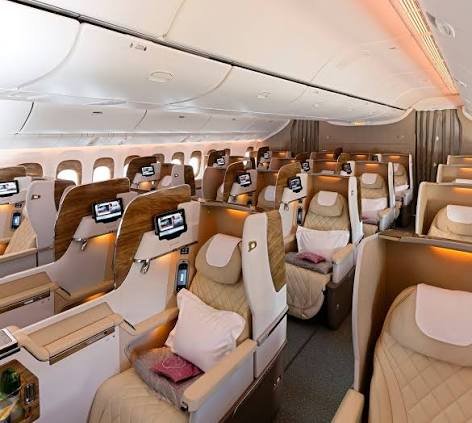
The honest answer is that on most transatlantic routes, the gap between a top-tier business class product and a true first class cabin has narrowed to the point where it’s genuinely hard to justify the price difference. Emirates, Qatar Airways, Singapore Airlines, and Lufthansa have all invested heavily in business class products that now include fully lie-flat beds, direct aisle access, noise-canceling headphones, premium meal services, and lounge access at major hubs. On a New York to London flight, you’ll sleep well in business class on any of those carriers.
The calculus shifts on ultra-long-haul routes. Singapore Airlines’ Suites product on the A380 between Singapore and New York or Singapore and London offers a private cabin with a door that closes, a double bed configuration, and a level of physical separation from the aircraft cabin that business class — regardless of quality — doesn’t replicate. For a 19-hour flight, that distinction becomes genuinely meaningful rather than purely aspirational.
The more interesting development in 2025 is what consolidator pricing does to the upgrade math. When first class fares are accessible at 40% to 60% below published retail through consolidator partnerships, the all-in price gap between premium business class and first class on certain carriers compresses significantly. Travelers who assumed first class was categorically out of their budget sometimes find, through an advisor-assisted search, that the upgrade costs less than they expected on specific routes and carriers. It’s worth asking the question before assuming the answer.
Three questions to ask before defaulting to business class on any route over 10 hours:
- What is the seat configuration? Herringbone or direct-aisle-access in business class changes the sleep quality equation dramatically.
- Is there a true first class product on this carrier and route — or does “first class” simply rebadge a business class cabin?
- What does consolidator pricing do to the fare gap between the two cabins on this specific routing?
Last-Minute Availability and the Pay-Later Option Most Travelers Miss
There’s a persistent myth that last-minute business class booking means paying a panic premium. For retail fares on public-facing platforms, this is often true. For consolidator-tier pricing, the opposite can apply. Airlines facing empty premium seats in the 48-to-72-hour window before departure sometimes release inventory to consolidator partners at rates that undercut even advance-purchase fares. The seat needs to fly. The revenue is better than zero. And the consolidator channel is where that inventory surfaces — not on Google Flights.
A dedicated advisor with carrier-direct relationships can access held inventory and waitlisted seats that disappear entirely from public search tools. This is particularly relevant for corporate travelers managing shifting client schedules or executives whose travel plans crystallize late in the week. The conventional wisdom that premium cabin booking requires weeks of advance planning is a retail-channel artifact. It doesn’t apply to consolidator-access booking through an advisor.
The financing structure is worth addressing directly. TravelBusinessClass.com offers a “Book Now, Pay Later” option through Affirm, which allows travelers to spread the cost of a premium ticket across installment payments. For a $4,500 business class ticket, this can mean managing $300-to-$500 monthly payments rather than a single large charge — a structure that changes the accessibility math for self-employed professionals, small business owners, and travelers whose employer reimbursement cycles run on a lag. Before committing, confirm the interest rate terms and any fare-lock mechanics with your advisor. Financing a flight at a high APR can erode the savings from consolidator pricing, so the numbers need to be run honestly.
What Accreditation Actually Tells You Before You Hand Over $5,000
The premium travel segment has a fraud problem that most industry coverage politely avoids. Ticket resellers operating without proper accreditation have taken deposits on business class bookings and disappeared. Travelers have arrived at airports with tickets that never existed. This isn’t a theoretical risk — it’s well-documented in consumer protection filings with the Federal Trade Commission and state attorneys general offices across the U.S.
This is why accreditation isn’t a box-checking exercise. It’s the mechanism that separates a legitimate consolidator agency from a gray-market operation. ARC certification means the agency participates in the regulated airline ticket settlement system — a financial infrastructure that provides consumer protection not available through unlicensed resellers. BBB A+ accreditation reflects dispute resolution history and transparency in business practices — a distinction that matters when you’re resolving a change fee dispute on a $6,000 ticket.
TravelBusinessClass.com carries a 4.9 Google rating, Trustpilot “Excellent” status, BBB A+ accreditation, and ARC certification. Each of those credentials reflects a different layer of verification. Reading Trustpilot reviews specifically for travel agencies requires attention to volume, recency, and how the agency responds to negative reviews — not just the aggregate score. A company with 2,000 reviews and a small number of well-handled complaints is a stronger signal than one with 50 uniformly glowing reviews and no evidence of how they behave when things go wrong.
Before booking any premium fare through a third-party platform, verify ARC certification directly through the ARC agency lookup tool. It takes 90 seconds and removes the single largest risk in the transaction.
Read Also: Best Travel Agency in Egypt for Sightseeing More Without Turning the Holiday Into a Timetable
The Real Cost of Booking Blind
Marcus from Chicago went back and calculated what he’d overpaid across three years of booking business class through retail channels. The number was uncomfortable. Not catastrophic, but the kind of sum that makes you rethink a few decisions quietly and with some feeling.
The structural reality is straightforward: airlines built a wholesale pricing tier that dramatically undercuts retail fares, made it accessible only through accredited agency partners, and then watched as most travelers continued booking at full retail price because no one told them the other channel existed. That’s not a conspiracy. It’s just the way pricing systems work when there’s no incentive for transparency.
The remedy is equally straightforward. Find an ARC-certified consolidator agency with verified reviews and a track record of handling complex itineraries. Ask specifically about consolidator pricing on your route before assuming the published fare is the best available. Use a human advisor for anything involving multiple cities, tight connections, or premium cabin seats on routes over eight hours. And run the numbers on last-minute availability before assuming you’ve missed your window.
The savings are real. The infrastructure is legitimate. The only thing standing between most travelers and $2,400 in recoverable per-ticket costs is the assumption that the first fare they see is the only fare that exists.
It isn’t.