ByJohn A
10 Things to Know Before Investing in Commercial Solar Panels
For businesses, electricity is more than a monthly expense—it is an ongoing operating cost that can directly affect profitability. As energy prices, sustainability goals, and business priorities evolve, many companies are exploring solar power as a long-term energy solution.
Investing in commercial solar panels can help businesses generate electricity on-site, potentially reduce grid dependence, and support environmental objectives. However, commercial solar is a significant investment, and proper planning is essential before making a commitment.
If you’re considering solar installation Columbus, here are 10 important things to understand before moving forward.
1. Understand Your Current Energy Consumption
Before investing in commercial solar panels, start by understanding how much electricity your business actually uses.
Review recent electricity bills to identify:
- Monthly and annual consumption
- Seasonal changes in usage
- Peak energy periods
- Major electrical loads
- Current electricity expenses
This information helps determine how much solar energy your property may need.
A business that operates heavy machinery will have very different requirements from a small office. During solar installation Columbus planning, an experienced installer can analyze your energy profile and recommend an appropriately sized system.
2. Your Solar System Should Be Properly Sized
Installing more panels doesn’t automatically mean greater value.
The ideal solar system should be based on electricity consumption, available space, panel efficiency, sunlight exposure, and your financial goals.
An oversized system may increase upfront costs without providing proportional benefits, while an undersized system may leave your business purchasing more grid electricity than expected.
When evaluating commercial solar panels, focus on the system’s expected energy production rather than simply counting the number of panels.
3. Evaluate Your Roof or Installation Site
The condition of your commercial property can have a major impact on the project.
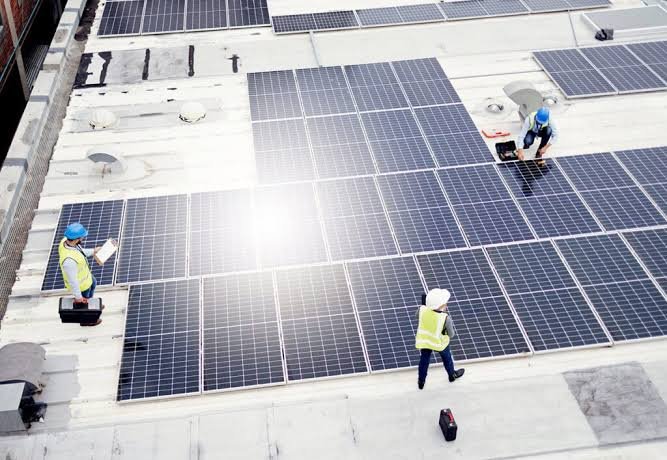
Before beginning solar installation Columbus, evaluate your roof’s age, structural condition, available space, orientation, and accessibility.
Shading is another important consideration. Trees, nearby buildings, HVAC equipment, and other structures can reduce sunlight reaching the panels.
If your roof requires significant repairs or replacement soon, consider addressing those issues before installing commercial solar panels. Removing and reinstalling panels later can create additional expenses.
4. Solar Equipment Quality Matters
Not all solar equipment is identical.
Solar panels can differ in efficiency, durability, warranties, and expected performance. Inverters, mounting systems, monitoring equipment, and other components also influence the reliability of a solar installation.
When comparing commercial solar panels, don’t choose equipment based solely on the lowest price.
Ask about:
- Panel efficiency
- Product warranties
- Inverter warranties
- Performance expectations
- Monitoring systems
- Mounting equipment
- Workmanship coverage
Quality equipment combined with professional installation can contribute to reliable long-term system performance.
5. Know the Complete Project Cost
The cost of solar installation Columbus involves more than purchasing panels.
Depending on the property and project, the total investment may include equipment, engineering, labor, mounting systems, electrical work, permitting, inspections, utility coordination, and monitoring.
Ask for an itemized proposal that clearly explains what is included.
When comparing commercial solar panels, look at the total project cost instead of comparing only the advertised equipment price.
A transparent proposal can help you identify potential additional expenses before construction begins.
6. Calculate Your Potential Savings
One of the biggest reasons businesses consider commercial solar panels is the opportunity to reduce electricity purchases from the grid.
However, savings vary from one property to another.
Your potential savings can be influenced by:
- Electricity rates
- Annual energy consumption
- Solar system capacity
- Energy production
- Property conditions
- Utility policies
- Financing structure
- Applicable incentives
When researching solar installation Columbus, request a customized financial projection based on your actual electricity usage.
Avoid relying on generic claims about how much every business can save.
7. Research Available Incentives
Solar incentives can affect the overall economics of a commercial project.
Depending on the project, business structure, location, and current regulations, certain tax benefits, utility programs, or other incentives may be available.
Because incentive programs and eligibility requirements can change, businesses should verify current information before including an incentive in their financial calculations.
When evaluating commercial solar panels, speak with qualified solar and financial professionals to understand which benefits may apply to your business.
Read Also: Video Production Melbourne: Professional Technical Methods for Correcting Poor On-Site Audio
8. Understand Your Financing Options
Businesses don’t necessarily have to fund a solar project entirely through an upfront payment.
Depending on the project and available programs, different financing structures may be worth considering.
Each option can affect cash flow, ownership, total project cost, and potential financial benefits differently.
Before choosing a financing option for solar installation Columbus, understand:
- Total repayment amount
- Interest or financing costs
- Ownership structure
- Payment schedule
- Contract length
- Maintenance responsibilities
- Potential incentives
The lowest monthly payment isn’t necessarily the lowest overall cost.
9. Read Warranties and Contracts Carefully
A solar contract can contain important details that affect your investment for years.
Before purchasing commercial solar panels, review the equipment warranties, workmanship coverage, installation timeline, payment terms, maintenance responsibilities, and system monitoring provisions.
Also ask who is responsible for permits, inspections, utility coordination, and repairs.
If any section of the agreement is unclear, ask the installer to explain it before signing.
A reputable solar installation Columbus provider should be willing to discuss the contract openly and answer questions without pressure.
10. Choose an Experienced Solar Installer
The quality of installation can have a significant impact on your system’s performance and longevity.
When researching solar installation Columbus, don’t select a company based only on price.
Consider:
- Commercial installation experience
- Customer reviews
- Equipment options
- System design approach
- Warranties
- Project timelines
- Permitting support
- Utility coordination
- Post-installation service
Commercial properties can involve more complex electrical, structural, and logistical requirements than smaller residential projects. Working with an installer experienced in commercial solar panels can help ensure that these considerations are addressed during planning and installation.
What Should Businesses Do Before Going Solar?
The best approach is to treat solar as a long-term business investment rather than simply an equipment purchase.
Start by reviewing your electricity consumption and property conditions. Then compare multiple solar proposals and evaluate their system designs, expected energy production, equipment, warranties, costs, and financing options.
Ask each installer how the system was sized and what assumptions were used to calculate projected savings.
Businesses should also consider future changes. If you expect to expand your facility, add equipment, or significantly increase electricity consumption, discuss those plans before finalizing the system.
Proper planning can help you avoid expensive changes later.
Conclusion
Investing in commercial solar panels can provide businesses with an opportunity to generate renewable electricity, potentially reduce energy expenses, and support long-term sustainability goals. However, the value of solar depends on making informed decisions before installation.
From understanding energy consumption and evaluating your roof to comparing equipment, calculating savings, reviewing incentives, and choosing the right installer, each step can influence your project’s overall success.
If you’re considering solar installation Columbus, take time to compare qualified providers and request a detailed assessment tailored to your property and business needs. The right solar system should balance cost, performance, reliability, and long-term value.
To learn more or connect with a trusted local solar provider, visit our Google Business Profile: https://share.google/tc4NjkPltz9gDntrK
Frequently Asked Questions
1. Are commercial solar panels worth the investment?
They can be worthwhile for businesses with suitable properties, significant electricity consumption, and favorable project economics. A customized financial assessment can help determine whether solar fits your business goals.
2. How much does solar installation Columbus cost?
There is no fixed price. Costs depend on system size, equipment, roof conditions, installation complexity, electrical requirements, engineering, permitting, and other project-specific factors.
3. How do I know how many solar panels my business needs?
The required number depends on electricity consumption, panel efficiency, available space, sunlight exposure, and desired system capacity. A professional assessment can determine the appropriate system size.
4. Do commercial solar panels require a lot of maintenance?
Solar systems generally require limited routine maintenance, but businesses should monitor system performance and address equipment or electrical issues when necessary. Maintenance requirements vary by system.
5. Can commercial solar panels eliminate my electricity bill?
Not necessarily. The amount of grid electricity a business continues to use depends on system size, energy consumption, solar production, operating hours, and utility arrangements.
6. Should I repair my roof before solar installation?
If your roof requires major repairs or replacement soon, addressing those issues before solar installation Columbus may help prevent future costs associated with removing and reinstalling the solar system.
7. Should businesses get multiple solar quotes?
Yes. Comparing multiple proposals can help you evaluate system design, equipment, warranties, expected production, pricing, financing, and service support.
8. What should I look for in a commercial solar installer?
Look for relevant commercial experience, transparent pricing, quality equipment, strong warranties, professional installation practices, permitting support, positive customer feedback, and reliable post-installation service.
9. Can solar support a company’s sustainability goals?
Yes. Commercial solar panels allow businesses to generate renewable electricity on-site and can become part of a broader sustainability and energy-management strategy.
10. What is the first step toward commercial solar?
Start with an assessment of your electricity usage and property. A qualified solar installation Columbus provider can then evaluate the site and develop a system proposal based on your energy requirements and business objectives.