ByJohn A
Indian Pooja Room Design Bringing Temple Details into Modern Homes
Modern homes have started leaning towards clean lines and open light, yet many families still long for the devotional richness of a traditional temple. This tension sits at the heart of an Indian pooja room design, where the wish for sacred detail meets the reality of contemporary rooms. The gap often leaves homeowners unsure where to begin with their temple design.
The answer rarely lies in recreating a full shrine indoors. Thoughtful Indian pooja room design turns selective temple detailing into a calm focal point that suits everyday living. A single carved arch or a slim jaali screen can carry deep tradition without crowding the room. Restraint, more than abundance, lets sacred character settle into a modern interior.
Where Temple Grandeur Overwhelms a Modern Room
The Trap of Covering Every Surface: A pooja space starts to feel heavy the moment carved detail spreads across every wall and ceiling at once. Dense ornaments that once looked grand in a large temple can shrink a compact home, pulling attention in too many directions. The eye finds no place to rest, and the calm the room was meant to hold slips away.
Detail Decided Too Late Narrows the Options: Choices left until a room is nearly finished limit how well temple detail can be woven in. In everyday design practice, artisans meet homeowners who set flooring and cabinetry first, then struggle to fit a carved arch into the space that remains. Borrowing from vernacular architecture, where form followed local material and ritual, planning sacred features early keeps proportion and structure in agreement.
See also: Food Labels: The Pre-Print Checklist You Actually Need
Traditional Elements Reworked for Modern Rooms
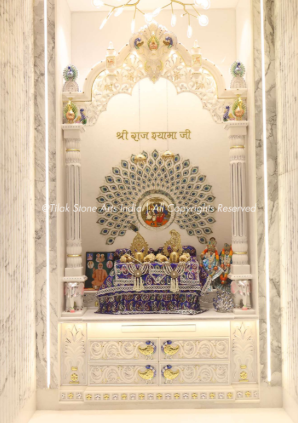
Arches and Toranas as a Gentle Frame: A carved arch or torana above the deities frames the shrine and signals its importance without filling the wall. Strong Indian pooja room design often rests on one commanding feature rather than many competing ones. A softly scalloped marble arch draws the gaze towards the idols, holding the ritual heart of the space while nearby surfaces stay calm.
Jaali Screens, Pillars and Fine Motifs: A jaali screen adds intricate pattern and filtered light while keeping the pooja area open rather than boxed in. Slim marble pillars, plain along their length and carved only at the capital, lend quiet structure in a small footprint. A single dome or a carved lotus panel then reads as a considered accent rather than clutter.
Restrained Detail Compared with Elaborate Recreation
Full Recreation Set against Careful Restraint: A full temple recreation delivers instant grandeur, yet it demands generous space and ongoing upkeep, with a room willing to be dominated by one style. Restrained detailing asks for more judgement but rewards a modern home with balance. Sound architectural proportion decides which route works, since the same arch that suits a double-height wall can overwhelm a modest niche.
Choosing What Fits Your Home and Ritual: The right level of detail depends on how the family prays and how the pooja area meets the rooms around it. Considered Indian pooja room design weighs daily use against visual weight, so the shrine stays usable for aarti and quiet reflection. A smaller home tends to gain more from one refined gesture than from many ornate features.
Marble Craft as the Bridge between Old and New
Hand Carving as the Link between Eras: Marble craftsmanship connects old temple language with modern interiors because a skilled hand renders traditional forms in clean, contemporary lines. A carver trained in temple work reads both the sacred grammar of a motif and the restraint a modern room needs. That fluency lets a lotus border feel timeless rather than dated beside plain plaster and pale timber.
A Surface Built to Age Gracefully: Marble rewards the initial outlay by holding its surface and character for decades when chosen and finished well. Unlike printed panels or laminates that fade or peel, a sealed marble shrine deepens in appeal as it settles into a home. Simple care keeps it luminous, and its longevity often makes the considered choice more economical over years of daily worship.
Practical Checks for a Balanced Pooja Space
Small Decisions behind a Calm Shrine: A few grounded choices keep the balance right as a scheme takes shape. Successful Indian pooja room design tends to come down to proportion and the quality of a handful of details rather than sheer quantity. The points below help a modern home hold real devotional character without tipping into excess.
- Anchor the shrine with one strong feature, such as a carved arch or a jaali screen, and keep the rest of the room restrained.
- Match the scale of carving to the size of the wall, so fine detail is read up close rather than lost across a broad surface.
- Keep surrounding décor simple, with plain paint and uncluttered storage that let the marble and its motifs lead.
- Favour warm, focused lighting near the deities to lift the stonework gently instead of flooding the whole niche.
- Choose motifs with personal or regional meaning, then repeat them sparingly across the design.
- Plan the sacred features early in a renovation, before flooring and cabinetry fix the available space.
A Sacred Corner Done Right from the Start
A modern home loses nothing by honouring tradition when temple detail is handled with proportion and care. Leaving the shrine until the room is built narrows what marble can become and raises the cost of putting it right. Speak with a specialist marble design team to shape a sacred corner that feels rooted and current, and start that conversation before your renovation is fixed.